
Estate Planning Services
Probate typically involves:
The probate process is required when:
We guide families through Texas probate proceedings efficiently, keeping costs reasonable and timelines as short as possible.
Not every estate requires probate. We review:
If probate can be avoided through small estate procedures or non-probate transfers, we explain those options.
If a will exists, we examine it to determine:
We prepare and file the necessary application with the appropriate Texas probate court (typically in the county where the deceased person lived). We handle:
We represent the proposed executor or administrator at the court hearing. Once the court is satisfied that the person is qualified and the will is valid (if applicable), the judge issues:
After appointment, the executor or administrator must:
Once debts are paid and all requirements are met, we assist with:
Independent administration allows the executor to manage the estate without ongoing court supervision—they don’t need court approval for each action. Dependent administration requires the executor to return to court for permission before selling property, paying debts, or making distributions. Independent administration is faster and far less expensive.
The most common way is for the deceased person’s will to include specific language appointing an “independent executor” or stating the executor should serve “free of court supervision.” If the will doesn’t include this language, all beneficiaries or heirs can agree in writing to allow independent administration, and the judge typically approves.
Independent probate typically takes four to eight months in most Texas counties. Dependent probate can take two to three years. Timelines vary based on estate complexity, family disputes, creditor issues, and court schedules.
Yes, in many cases. Assets can pass outside of probate through:
If all assets pass through these mechanisms, probate may not be necessary.
Texas intestate succession laws determine who inherits. The deceased person’s spouse and children typically inherit, but the distribution depends on whether children are from the current marriage or previous relationships. The court appoints an administrator (rather than an executor) to manage the estate, and dependent administration is more likely.
No. Small estates with limited assets may qualify for simplified procedures like small estate affidavits. Estates where all property passes through beneficiary designations, joint ownership, or trusts generally don’t require probate.
The executor or administrator serves as the legal representative of the estate. Their responsibilities include:
Independent probate in Williamson County typically costs around $5,000 to $6,000, plus court filing fees. Dependent probate usually costs $15,000 to $20,000 or more due to additional court hearings and legal work. Complex estates, disputes, or contested wills increase costs.
Disputes can arise over will validity, executor selection, or asset distribution. In contested cases, the court may hold hearings to resolve disagreements. These situations increase costs and extend timelines significantly. Having a clearly drafted will and communicating your wishes to family members while alive can prevent many disputes.
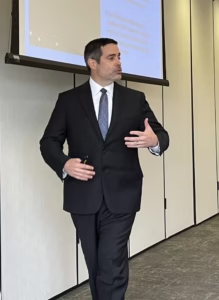
Estate planning makes a lot more sense when you can ask questions in real time.
Silverleaf Legal Group hosts free educational seminars throughout Central Texas and East Texas where attorney Tom Fortenberry walks through the fundamentals — wills, trusts, powers of attorney, probate, asset protection, and long-term care planning — in plain English, with no sales pressure and no obligation.
These aren’t sales events. They’re the same education-first approach that shapes every client relationship at Silverleaf. Come learn, ask questions, and leave with a clearer picture of where you stand.