
Estate Planning Services
Special needs planning addresses:
Without proper planning:
Our approach focuses on understanding your loved one’s current situation and long-term needs, then building a plan that coordinates with existing benefits and support systems.
Every family’s situation is different, and this is where we start: understanding yours.
We talk through your loved one’s current government benefits, medical needs, living situation, and quality-of-life expenses. We also identify who currently provides care and oversight — and who you envision in those roles in the future.
A special needs trust can be one of the most important tools in your plan, and one of the least understood. Here’s how it actually works:
Special needs planning doesn’t exist in isolation. It has to work alongside everything else you’ve put in place for your family. We integrate the special needs trust into your overall estate plan. This often means:
The trustee manages trust assets and makes distribution decisions that won’t affect government benefits. We help you evaluate:
Preparing the right documents is where the planning becomes real.
We prepare the special needs trust and related documents using language designed to meet government benefit rules. Precise drafting matters here — the way a trust is worded can affect how it’s treated under SSI and Medicaid guidelines.
We help you understand how assets should be transferred into the trust, either during your lifetime or at death. We also discuss the importance of communicating with other family members so they don’t inadvertently make gifts that disrupt benefits.
A first-party special needs trust holds assets that belong to the individual with disabilities, often from a personal injury settlement or inheritance received directly. These trusts must include a Medicaid payback provision. A third-party special needs trust holds assets from someone else, like parents or grandparents, and does not require payback to Medicaid.
You can, but doing so may disqualify them from SSI and Medicaid until they spend down the inheritance to allowable resource limits. A properly structured special needs trust allows you to provide financial support without affecting benefit eligibility.
The trust can pay for supplemental needs beyond what government benefits cover. Things like additional therapy, recreational activities, travel, hobbies, electronics, personal care attendants, and quality-of-life enhancements. The trust generally cannot pay for food or shelter directly, as these are considered “in-kind support” that can reduce SSI benefits.
The trustee should understand government benefit rules and your loved one’s needs. Options include a trusted family member, a professional trustee with special needs experience, or a corporate trustee. Some families use a co-trustee arrangement combining family involvement with professional administration.
In a third-party special needs trust (created by parents or others), remaining funds typically go to other beneficiaries you name, often siblings or other family members. In a first-party trust (funded with the beneficiary’s own assets), Medicaid may be entitled to reimbursement for benefits provided during the beneficiary’s lifetime.
It depends on whether your child is receiving Medicaid through SSI (which is means-tested) or through other programs. If Medicaid eligibility depends on income and asset limits, a special needs trust may still be necessary. We help you evaluate your child’s specific benefit structure.
You can establish a special needs trust in your will (called a testamentary trust), which takes effect after your death. Some families prefer to create and fund the trust during their lifetime, which allows them to see how it operates and make adjustments if needed. Either approach can work depending on your situation.
This is one of the questions families think about most and ask about least. It deserves a direct answer.
What happens to the remaining funds in a special needs trust at a beneficiary’s death depends on the type of trust involved.
For a third-party special needs trust, meaning one funded with assets belonging to the parents or other family members, not the beneficiary, the family has flexibility. The trust document can direct remaining funds to siblings, other family members, a charity, or wherever the family chooses. There is no government payback requirement for third-party trusts.
For a first-party special needs trust, meaning one funded with assets that belonged to the beneficiary, such as a personal injury settlement or an inheritance received directly, federal law requires that Medicaid be reimbursed for benefits paid during the beneficiary’s lifetime before any remaining funds pass to other beneficiaries. This is called the Medicaid payback provision.
Most parents doing proactive estate planning are creating third-party trusts, which means the payback provision typically doesn’t apply to their situation. However, the distinction matters, and it’s one reason how a trust gets funded, and with whose assets, is a decision that shapes the entire structure.
If there are funds remaining after any applicable obligations are satisfied, those assets can continue to benefit the people and causes your family cares about most.
This is a common concern. Many parents choose to leave additional assets to the child with special needs through the trust because that child may have lifelong care needs. Other parents equalize distributions and explain the reasoning to all children. Communication while you’re alive can prevent misunderstandings later.
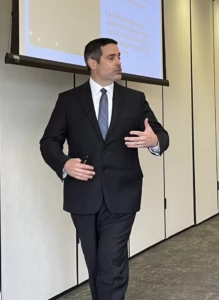
Estate planning makes a lot more sense when you can ask questions in real time.
Silverleaf Legal Group hosts free educational seminars throughout Central Texas and East Texas where attorney Tom Fortenberry walks through the fundamentals — wills, trusts, powers of attorney, probate, asset protection, and long-term care planning — in plain English, with no sales pressure and no obligation.
These aren’t sales events. They’re the same education-first approach that shapes every client relationship at Silverleaf. Come learn, ask questions, and leave with a clearer picture of where you stand.